




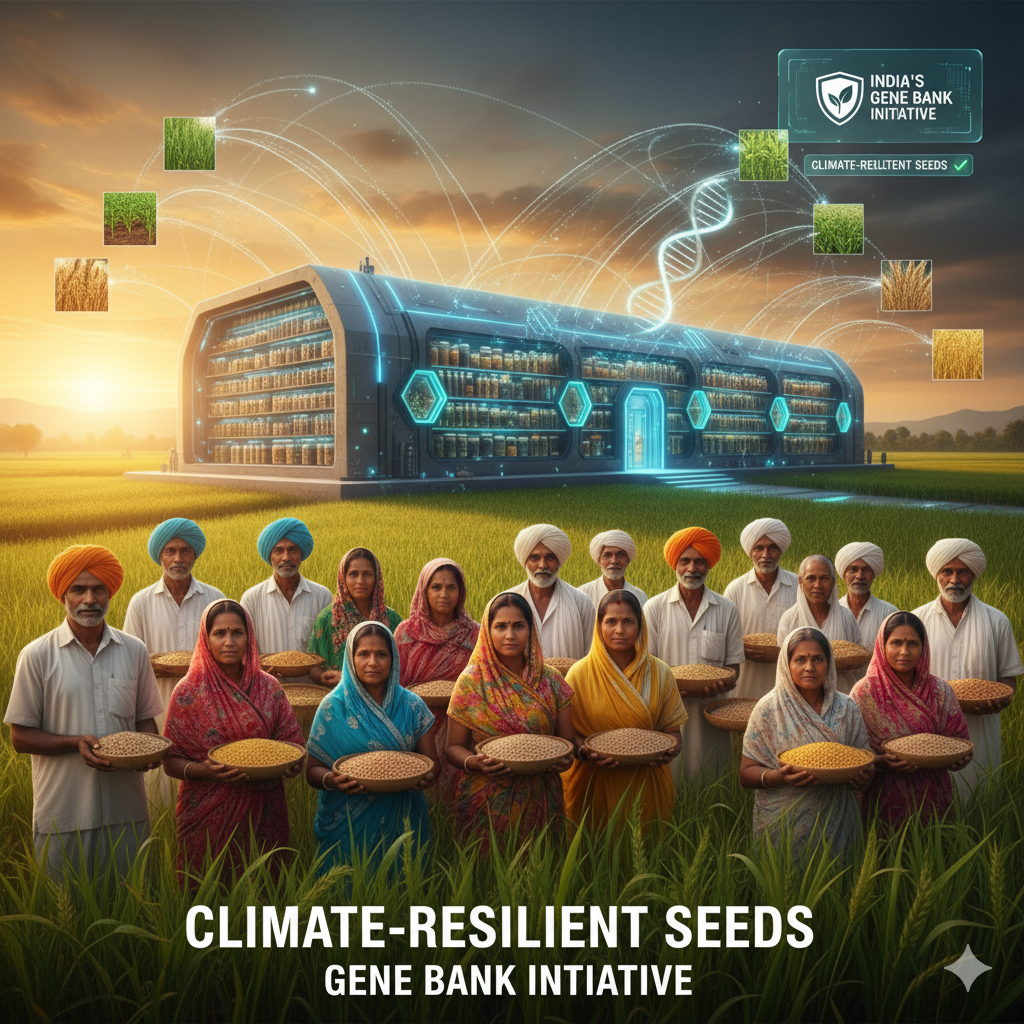

India’s second National Gene Bank, established in 2024 with an investment of ₹2,800 crores, represents a monumental step toward securing agricultural resilience against climate change. Housing over 1.2 million seed accessions and utilizing advanced cryogenic preservation technology, this facility safeguards genetic resources essential for developing climate-adapted crops capable of feeding India’s growing population under increasingly challenging environmental conditions.
Global Context of Genetic Resource Conservation
Agricultural biodiversity faces unprecedented threats from climate change, intensive farming practices, and habitat destruction. The UN Food and Agriculture Organization estimates that 75% of agricultural diversity was lost during the 20th century. Current loss rates exceed natural extinction by 1,000-10,000 times, creating urgent conservation imperatives.
Climate change accelerates genetic erosion as traditional varieties become unsuitable for changing conditions. Temperature increases of 2-3°C threaten existing crop varieties across most agricultural regions. Shifting rainfall patterns make drought-tolerant and flood-resistant genes increasingly valuable. Extreme weather events destroy crops and eliminate genetic resources permanently.
International genetic resource conservation efforts demonstrate growing recognition of biodiversity importance. The Global Seed Vault in Norway stores 1.25 million samples from worldwide collections. National gene banks in China, USA, and Europe preserve regional genetic diversity. International exchanges facilitate access to genetic resources for crop improvement.
Investment in genetic conservation reaches unprecedented levels globally. Government funding exceeds $2.5 billion annually for gene bank operations and research. Private sector investment in genetic resource development approaches $1.8 billion. International development funding provides $750 million for conservation programs in developing countries.
India’s Agricultural Genetic Diversity
India represents one of the world’s most important centers of crop genetic diversity, harboring thousands of indigenous varieties across major crops. Rice diversity includes over 100,000 traditional varieties adapted to diverse growing conditions. Wheat landraces number in thousands with adaptation to various stress conditions. Millet varieties demonstrate exceptional drought tolerance and nutritional diversity.


Traditional farming systems maintained genetic diversity through variety conservation and seed exchange. Farmer-saved seeds preserved locally adapted varieties across generations. Community seed banks maintained varieties for specific purposes and conditions. Regional exchange systems spread beneficial traits across agricultural areas.
Genetic erosion accelerated with Green Revolution adoption of uniform, high-yielding varieties. Traditional variety cultivation declined from 80% of area in 1960 to 20% by 2000. Uniform varieties replaced diverse landraces across major production areas. Seed industry consolidation reduced available variety options for farmers.
Climate change creates new urgency for genetic resource conservation and utilization. Rising temperatures require heat-tolerant varieties. Variable rainfall demands drought and flood-resistant crops. Changing pest patterns necessitate resistance gene diversity. Extreme weather tolerance becomes essential for production stability.
National Gene Bank Infrastructure and Technology
Advanced Preservation Technology
India’s second National Gene Bank utilizes state-of-the-art preservation technology ensuring long-term genetic resource viability. Cryogenic storage at -196°C enables seed preservation for decades without viability loss. Liquid nitrogen systems maintain ultra-low temperatures continuously. Backup power systems prevent temperature fluctuations during emergencies.
Seed processing facilities prepare genetic material for long-term storage through controlled drying and packaging. Moisture content reduction to 5-7% optimizes storage longevity. Hermetic packaging prevents contamination and moisture ingress. Quality testing ensures viability before storage commitment.
Storage capacity accommodates 1.2 million seed accessions across multiple crops and species. Modular storage design enables expansion as collections grow. Automated retrieval systems facilitate efficient access to stored materials. Inventory management systems track location and characteristics of every accession.
Safety and security systems protect valuable genetic resources from natural disasters and human threats. Fire suppression systems using inert gases prevent damage to stored seeds. Security systems control access and monitor facility conditions continuously. Duplicate storage at multiple locations provides insurance against catastrophic loss.
Collection and Acquisition Programs
Systematic collection expeditions target areas with high genetic diversity and conservation urgency. Priority regions include Western Ghats, Eastern Himalayas, and Northeast India. Tribal areas often harbor unique varieties with special adaptation traits. Remote locations provide access to varieties isolated from modern agriculture.
Community partnerships facilitate collection while respecting traditional knowledge and rights. Prior informed consent ensures ethical collection practices. Benefit-sharing agreements provide returns to communities contributing genetic resources. Traditional knowledge documentation accompanies genetic material collection.
International exchange programs expand available genetic diversity through cooperative agreements. Multilateral System of the International Treaty facilitates crop genetic resource exchange. Bilateral agreements with countries sharing agro-ecological conditions. Research collaborations provide access to improved breeding materials.
Emergency rescue operations preserve genetic resources threatened by development or climate change. Rapid response teams collect endangered varieties before permanent loss. Documentation efforts record traditional knowledge associated with threatened varieties. Ex-situ conservation complements in-situ preservation efforts.
Characterization and Evaluation Systems
Genetic Characterization Technology
Advanced molecular techniques enable precise genetic characterization of conserved accessions. DNA fingerprinting creates unique genetic profiles for each accession. Genome sequencing identifies specific genes and traits of interest. Molecular markers facilitate efficient trait identification and selection.
High-throughput screening systems evaluate large numbers of accessions for climate-relevant traits. Automated phenotyping platforms assess plant responses to stress conditions. Controlled environment facilities test tolerance to heat, drought, and other stresses. Field evaluation sites represent diverse agro-ecological conditions across India.
Database systems integrate genetic, phenotypic, and passport data for comprehensive resource documentation. Searchable databases enable researchers to identify accessions with desired traits. Geographic information systems map collection locations and adaptation patterns. Online portals provide global access to information about available genetic resources.
Quality control systems ensure data accuracy and genetic resource integrity. Regular viability testing monitors seed health during storage. Genetic integrity verification prevents contamination and mix-ups. Data validation protocols ensure information accuracy and completeness.
Trait Discovery and Validation
Systematic screening programs identify accessions with climate-resilient traits essential for future crop improvement. Drought tolerance evaluation uses controlled water stress conditions. Heat tolerance testing exposes plants to elevated temperatures. Salinity tolerance screening identifies varieties adapted to saline conditions.
Disease and pest resistance evaluation identifies genetic resources with natural protection mechanisms. Screening for resistance to major pathogens including blast, rust, and bacterial diseases. Insect resistance evaluation covers major pest species across different crops. Virus resistance testing addresses emerging viral threats.
Nutritional quality assessment identifies varieties with enhanced nutritional content. Protein content and quality analysis for improved human nutrition. Micronutrient density evaluation for addressing malnutrition. Anti-nutritional factor assessment ensures food safety and quality.
Industrial quality traits evaluation supports specialty market development. Oil content and composition analysis for oilseed crops. Starch properties evaluation for food processing applications. Fiber quality assessment for textile applications.
Climate Adaptation Research and Development
Breeding Program Integration
Gene bank resources directly support crop improvement programs targeting climate adaptation. Breeding programs access genetic diversity for developing climate-resilient varieties. Trait introgression transfers beneficial genes from wild relatives and landraces into modern varieties. Speed breeding techniques accelerate variety development timelines.
Pre-breeding programs develop intermediate materials bridging the gap between genetic resources and breeding programs. Wide crosses incorporate genes from wild species into cultivated backgrounds. Backcrossing programs transfer specific traits while maintaining crop characteristics. Advanced breeding lines provide ready-to-use materials for variety development.
Participatory breeding involves farmers in variety development using genetic resource diversity. Farmer preference evaluation guides breeding objectives and selection criteria. On-farm testing validates variety performance under real farming conditions. Community-based breeding programs maintain local adaptation while incorporating new traits.
Genomic selection techniques utilize genetic resource characterization data for efficient breeding. Marker-assisted selection identifies plants with desired traits early in development. Genomic prediction models forecast variety performance using genetic data. Gene editing techniques precisely modify traits using genetic resource knowledge.
Research Collaboration Networks
National research institutions coordinate genetic resource utilization for crop improvement. Indian Council of Agricultural Research (ICAR) institutes lead research on specific crops and traits. State Agricultural Universities conduct region-specific adaptation research. Central University partnerships advance basic research on genetic mechanisms.
International research collaborations accelerate genetic resource utilization and technology development. CGIAR center partnerships provide access to global genetic diversity and expertise. Bilateral research agreements facilitate technology and material exchange. Corporate partnerships bring advanced technologies and commercial development capabilities.
Public-private partnerships combine genetic resources with commercial development expertise. Seed company collaborations accelerate variety development and commercialization. Technology company partnerships bring advanced screening and selection tools. Startup collaborations develop innovative applications for genetic resource utilization.
Regional research networks address shared challenges across agro-ecological zones. South Asian collaboration addresses monsoon-dependent agriculture challenges. Tropical agriculture networks share expertise on heat and humidity tolerance. Dryland agriculture collaborations focus on drought and heat tolerance.
Success Stories and Impact Examples
Drought-Tolerant Rice Development
Genetic resource screening identified traditional rice varieties with exceptional drought tolerance from Eastern India. Nagina 22 and other landraces provided genes for maintaining yield under water stress conditions. Breeding programs incorporated these traits into high-yielding backgrounds creating improved varieties.
Molecular characterization revealed specific genes responsible for drought tolerance including root architecture and osmotic adjustment mechanisms. Marker-assisted selection accelerated trait transfer into multiple genetic backgrounds. Field testing validated performance under various drought conditions across different regions.
Commercial varieties incorporating genetic resource-derived drought tolerance now cover over 2 million hectares in drought-prone areas. Farmer adoption rates exceed 60% in target regions due to demonstrated yield stability. Economic impact includes reduced crop losses during drought years worth ₹5,000-12,000 per hectare.
International applications extend impact beyond India’s borders. Drought-tolerant varieties adapted for Sub-Saharan Africa using Indian genetic resources. Technology transfer programs share breeding techniques and genetic materials. Research collaborations advance understanding of drought tolerance mechanisms.
Heat-Tolerant Wheat Varieties
Traditional wheat landraces from Rajasthan and Gujarat provided genes for heat tolerance essential for climate change adaptation. Screening programs identified varieties maintaining grain filling under temperatures exceeding 35°C. Genetic analysis revealed multiple mechanisms including heat shock proteins and membrane stability.
Breeding programs developed heat-tolerant varieties suitable for late-sown conditions when temperatures increase during grain filling. Multi-location testing validated performance across different temperature regimes. Farmer participatory evaluation ensured varieties meet productivity and quality requirements.
Adoption impact includes expanded wheat cultivation in previously unsuitable areas due to heat stress. Late-sown wheat becomes viable option for farmers facing delayed monsoons. Heat tolerance enables wheat cultivation as climate warming continues across North India.
Research impact advances understanding of heat tolerance mechanisms applicable to other crops. Gene discovery enables marker-assisted selection for heat tolerance. Breeding strategies developed for heat tolerance apply to global wheat improvement programs.
Salinity-Tolerant Crop Development
Coastal area genetic resources provide genes for salinity tolerance essential for expanding cultivation to marginal lands. Traditional varieties from Gujarat, Tamil Nadu, and West Bengal demonstrate adaptation to saline conditions. Screening programs identify specific tolerance mechanisms including ion exclusion and compartmentalization.
Crop improvement programs utilize salinity tolerance genes for developing varieties suitable for coastal agriculture and saline irrigation water. Rice varieties tolerant to seawater intrusion enable cultivation in coastal areas. Wheat varieties handle saline irrigation water from tube wells in northwestern India.
Economic impact includes cultivation expansion to 500,000 hectares of previously unusable saline land. Farmer income increases through cultivation of previously barren areas. Food security improvement through increased production area and crop diversification options.
Environmental benefits include soil reclamation through salt-tolerant crop cultivation. Reduced pressure on freshwater resources through saline water utilization. Coastal protection through agricultural land use preventing erosion and habitat loss.
Nutritional Enhancement Programs
Traditional varieties provide genetic diversity for developing nutrient-dense crops addressing malnutrition challenges. Iron-rich rice varieties from tribal areas provide genes for biofortification programs. High-protein wheat landraces contribute to nutritional quality improvement. Zinc-dense pearl millet varieties address micronutrient deficiencies.
Biofortification programs utilize genetic resource diversity for developing varieties with enhanced nutritional content. Breeding programs select for high mineral content while maintaining yield and adaptation. Nutrition evaluation ensures bioavailability of enhanced nutrients for human health benefits.
Public health impact includes reduced malnutrition rates in areas cultivating biofortified varieties. Iron-deficiency anemia reduction through iron-rich rice consumption. Zinc deficiency improvement through enhanced pearl millet varieties. Protein malnutrition reduction through high-protein crop varieties.
Commercial development creates market opportunities for nutritionally enhanced varieties. Premium pricing for certified nutritious varieties. Institutional markets including school feeding programs demand biofortified grains. Export opportunities for nutrient-dense specialty crops.
Technology Innovation and Digitalization
Digital Gene Bank Management
Advanced database systems manage comprehensive information about genetic resource collections including passport data, characterization information, and evaluation results. Cloud-based storage ensures data security and global accessibility. Standardized data formats enable information sharing and integration.
Artificial intelligence applications analyze genetic resource data for trait discovery and utilization opportunities. Machine learning algorithms identify patterns in large datasets connecting genetic markers with phenotypic traits. Predictive models forecast variety performance using genetic and environmental data.
Blockchain technology ensures data integrity and traceability for genetic resource management. Immutable records track collection, storage, and distribution activities. Smart contracts automate benefit-sharing agreements with genetic resource providers. Digital identity systems prevent unauthorized access and misuse.
Virtual reality and augmented reality technologies enhance genetic resource education and training. Immersive experiences demonstrate genetic diversity and conservation importance. Training simulations teach gene bank management techniques. Public outreach programs use VR to communicate conservation messages.
Genomic Technology Applications
Whole genome sequencing of genetic resource accessions reveals complete genetic information for trait discovery and utilization. Comparative genomics identifies genes responsible for specific traits across different accessions. Evolutionary analysis reveals relationships between accessions and guides collection strategies.
Gene editing technologies utilize genetic resource information for precise crop improvement. CRISPR techniques modify specific genes identified in genetic resource screening. Base editing enables precise nucleotide changes for trait improvement. Prime editing allows insertions and deletions for trait modification.
Rapid breeding techniques accelerate genetic resource utilization for variety development. Speed breeding environments enable multiple generations per year. Marker-assisted selection reduces breeding time by identifying desired traits early. Genomic selection predicts variety performance using genetic markers.
Synthetic biology applications create novel traits using genetic resource information. Pathway engineering incorporates beneficial biochemical pathways from genetic resources. Protein design creates new enzymes and proteins based on genetic resource sequences. Metabolic engineering enhances nutritional content and stress tolerance.
Global Partnerships and International Cooperation
International Treaty Compliance
India actively participates in the International Treaty on Plant Genetic Resources for Food and Agriculture ensuring sustainable genetic resource management. Multilateral System participation enables facilitated access to genetic resources for research and breeding. Benefit-sharing mechanisms ensure equitable returns to genetic resource providers.
Global genetic resource networks coordinate conservation efforts and avoid duplication. CGIAR gene banks collaborate on collection, conservation, and utilization activities. Regional networks share responsibilities for specific crops and geographic areas. Emergency response networks coordinate genetic resource rescue operations.
Technology transfer programs share conservation techniques and genetic resource utilization methods with developing countries. Training programs build capacity for gene bank management and crop improvement. South-South cooperation facilitates knowledge and technology exchange. Technical assistance supports establishing and upgrading gene bank facilities.
Research collaborations advance genetic resource science and utilization techniques. International consortiums address global challenges using genetic resource diversity. Collaborative breeding programs develop varieties for shared challenges. Joint research projects advance understanding of genetic resource potential and utilization.
Capacity Building and Education
Human Resource Development
Specialized training programs develop expertise in genetic resource conservation and utilization. University programs offer degrees in plant genetic resources and conservation biology. Professional development courses update skills in emerging technologies and techniques. International fellowships provide exposure to global best practices.
Research capacity building ensures sustainable genetic resource utilization for crop improvement. PhD programs develop advanced research skills in genetic resource science. Postdoctoral fellowships advance cutting-edge research in trait discovery and utilization. Faculty exchange programs spread expertise across institutions and regions.
Technical capacity development supports gene bank operations and maintenance. Training programs for gene bank curators cover collection, storage, and management techniques. Laboratory technician training ensures proper seed processing and storage procedures. Database management training enables effective information systems operation.
Extension capacity building connects genetic resource conservation with farmer and community needs. Extension agent training covers genetic resource importance and utilization benefits. Farmer education programs demonstrate genetic diversity value and conservation needs. Community organization training builds local capacity for in-situ conservation.
Public Awareness and Education
Educational programs build public understanding of genetic resource importance for food security and climate adaptation. School curricula include genetic diversity and conservation topics. University courses cover genetic resource science and conservation biology. Professional development programs update knowledge on genetic resource applications.
Media engagement communicates genetic resource conservation importance to broader audiences. Documentary productions showcase genetic diversity and conservation success stories. Social media campaigns raise awareness about genetic resource challenges and opportunities. Public events demonstrate genetic resource utilization benefits.
Museum and exhibition programs provide public access to genetic resource information and conservation messages. Interactive displays demonstrate genetic diversity and evolution concepts. Seed exhibitions showcase crop genetic diversity and traditional varieties. Educational materials support formal and informal learning about genetic resources.
Community engagement programs connect conservation efforts with local communities and traditional knowledge holders. Traditional knowledge documentation preserves information associated with geneticRevenue diversification through multiple sales channels optimizes pricing and reduces market risk. Direct-to-consumer sales achieve highest margins at ₹600-1,200 per kg retail pricing. Restaurant partnerships provide stable demand at ₹350-650 per kg.
Retail partnerships enable volume sales at moderate margins. Modern retail chains including Big Basket, Nature’s Basket, and Spencer’s stock vertical farm produce. Premium grocery stores emphasize local production and sustainability benefits.
Subscription models create predictable revenue streams. Weekly vegetable boxes priced at ₹250-450 serve health-conscious urban consumers. Corporate office delivery services target company cafeterias and employee wellness programs.
Value-added products increase revenue per square meter. Ready-to-eat salad mixes command ₹700-1,400 per kg pricing. Herb-infused oils and extracts generate ₹6,000-18,000 per liter revenues. Dehydrated products extend shelf life and reach distant markets.
Break-Even Analysis and Financial Performance
Financial modeling indicates break-even achievable within 30-42 months for well-managed operations. Revenue generation begins 25-35 days after crop planting. Full production capacity reached within 4-6 months of facility commissioning.
Monthly revenue potential ranges from ₹12,000-22,000 per square meter for leafy greens cultivation. High-value microgreens achieve ₹18,000-32,000 per square meter monthly. Diversified production systems average ₹14,000-25,000 per square meter monthly.
Operating margin progression shows improvement over operational maturity. First-year margins typically range from -15% to +8%. Second-year performanceGrowing inputs contribute 18-25% of operating costs. Premium seeds cost ₹3-12 per plant depending on variety. Nutrient solutions average ₹18-28 per square meter monthly. Growing substrates require ₹12-20 per square meter monthly replacement.
Maintenance, utilities, and miscellaneous expenses account for remaining 12-18% of operating costs. Equipment maintenance averages 4-6% of capital investment annually. Water, insurance, and administrative costs add ₹25-40 per square meter monthly.
Monthly operating costs range from ₹380-650 per square meter for efficient operations. Cost optimization through automation, energy efficiency, and process improvement reduces expenses over time.
Revenue Generation and Market Positioning
Premium positioning enables superior pricing compared to conventional agriculture. Quality attributes including pesticide-free cultivation, consistent availability, and extended shelf life justify price premiums. Traceability and food safety certifications support premium positioning.
Leafy greens achieve 4-6x conventional prices through quality differentiation. Lettuce varieties sell at ₹400-650 per kg wholesale versus ₹100-140 for field-grown produce. Spinach commands ₹350-500 per kg compared to ₹80-120 conventional pricing.
Specialty crops command exceptional premiums. Basil, mint, and cilantro achieve ₹800-1,800 per kg wholesale pricing. Microgreens reach ₹2,200-4,200 per kg. Edible flowers sell for ₹3,500-8,500 per kg to high-end restaurants.
Revenue diversification through multiple sales channels optimizes pricing and reduces market risk. Direct-to-consumer sales achieve highest margins at ₹600-1,200 per kg retail pricing. Restaurant partnerships provide stable demand at ₹350-650 per kg.
Community engagement programs connect conservation efforts with local communities and traditional knowledge holders. Traditional knowledge documentation preserves information associated with genetic resources. Participatory conservation programs involve communities in genetic resource management. Benefit-sharing initiatives ensure communities receive returns from genetic resource utilization.
The establishment of India’s second National Gene Bank represents a critical investment in agricultural resilience and food security. By preserving 1.2 million seed accessions and advancing genetic resource utilization for climate adaptation, this initiative safeguards the genetic foundation necessary for feeding India’s growing population under changing climate conditions. Continued investment in genetic resource conservation, characterization, and utilization will ensure India’s agricultural future remains secure and productive.