





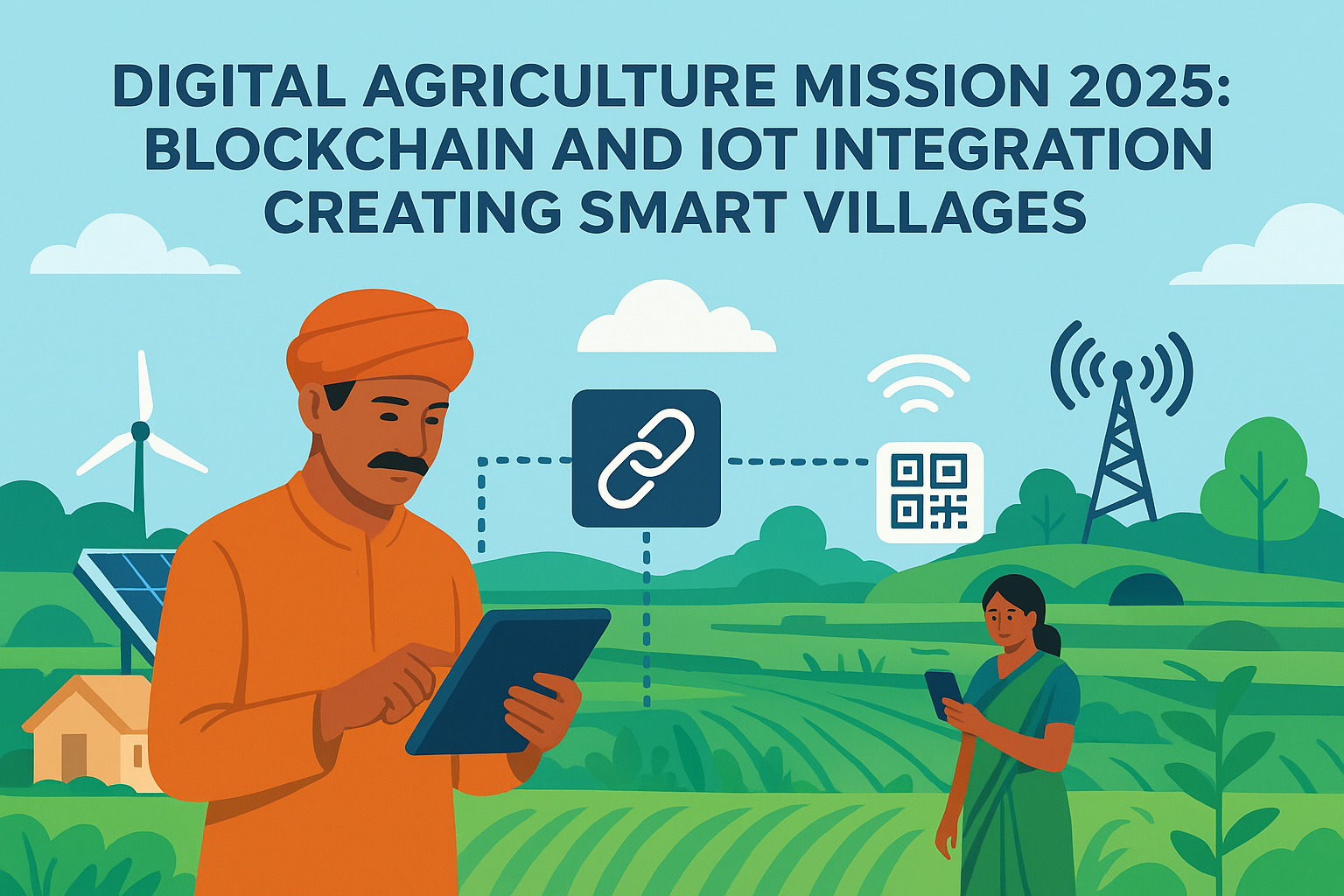

India’s Digital Agriculture Mission 2025 is revolutionizing rural landscapes through integrated blockchain and IoT technologies, transforming traditional villages into smart agricultural hubs. This ambitious initiative, with a budget allocation of ₹25,000 crores, aims to digitize agriculture across 100,000 villages, creating an interconnected ecosystem that enhances productivity, traceability, and farmer incomes.
Mission Overview and Scope
The Digital Agriculture Mission 2025 represents India’s most comprehensive agricultural digitization effort. Launched in January 2024, the mission targets complete digital transformation of agricultural value chains. The program integrates multiple technologies including blockchain, IoT sensors, artificial intelligence, and mobile platforms.
Geographic coverage spans all agro-climatic zones. Phase 1 covers 25,000 villages across 15 states. Phase 2 expands to 50,000 additional villages. Phase 3 completes coverage with remaining 25,000 villages. Each phase includes comprehensive infrastructure development and farmer training.
Investment allocation prioritizes technology infrastructure. ₹10,000 crores supports IoT sensor deployment. ₹8,000 crores funds blockchain infrastructure development. ₹5,000 crores enables mobile connectivity enhancement. ₹2,000 crores covers training and capacity building programs.
Blockchain Infrastructure Development
Blockchain technology forms the backbone of agricultural data management and transaction processing. Distributed ledger systems ensure data integrity and transparency across the agricultural value chain. Smart contracts automate processes and payments. Digital identity management enables secure farmer authentication.
Technical architecture utilizes hybrid blockchain networks combining public and private chains. Public networks ensure transparency in government schemes and subsidy distribution. Private networks protect sensitive commercial information. Interoperability protocols enable seamless data exchange between different blockchain networks.
Node deployment strategy ensures comprehensive coverage. Primary nodes operate at district levels with high-capacity servers. Secondary nodes function at block levels with moderate processing power. Mobile nodes serve remote areas through satellite connectivity. Redundancy protocols prevent data loss and ensure continuous operation.
IoT Sensor Network Implementation
IoT sensor networks provide real-time agricultural monitoring across multiple parameters. Soil moisture sensors guide irrigation decisions. Weather stations capture microclimate data. Crop monitoring devices track growth parameters. Livestock sensors monitor animal health and behavior.
Sensor deployment density varies by crop type and farm size. High-value crops receive dense sensor coverage with monitoring every 0.5 hectares. Cereal crops utilize moderate density with coverage every 2 hectares. Extensive systems like rangelands use sparse coverage every 10 hectares.
Data transmission utilizes multiple connectivity options. LoRaWAN networks provide long-range, low-power communication for rural areas. 4G/5G cellular networks enable high-bandwidth data transmission. Satellite communication serves remote locations. Mesh networking creates redundant communication paths.
Smart Village Infrastructure
Smart village infrastructure integrates digital technologies with traditional farming systems. Village-level data centers process and store local agricultural information. Community networks enable farmer-to-farmer communication. Digital kiosks provide technology access for less tech-savvy farmers.
Power infrastructure supports technology operations. Solar microgrids provide sustainable energy for digital equipment. Battery storage systems ensure continuous operation during power outages. Energy-efficient hardware minimizes power consumption. Smart grid integration optimizes energy distribution.
Connectivity infrastructure ensures reliable internet access. Fiber optic cables connect village data centers. Wi-Fi hotspots provide local internet access. Satellite terminals serve remote locations. 5G towers enable high-speed mobile connectivity.
Farmer Digital Identity System
Comprehensive digital identity systems enable secure access to digital services. Biometric registration creates unique farmer profiles. Blockchain-based certificates ensure identity verification. Mobile applications provide easy access to digital services. Integration with government databases streamlines service delivery.
Identity verification processes balance security with accessibility. Aadhaar integration provides foundational identity. Land records verification confirms farming status. Bank account linking enables financial transactions. Insurance policy integration streamlines claim processes.
Privacy protection mechanisms safeguard farmer data. Encryption protocols secure data transmission. Access controls limit data visibility. Consent management enables farmer control over data usage. Audit trails track data access and usage patterns.
Supply Chain Traceability Revolution
Blockchain-enabled traceability systems track agricultural products from farm to consumer. QR codes provide product authentication. Smart contracts automate quality verification. Payment systems ensure prompt farmer compensation. Consumer apps display product journey information.
Traceability implementation varies by product type. High-value exports receive comprehensive tracking from seed to shipment. Organic products utilize detailed certification and monitoring. Processed foods track ingredient sourcing and manufacturing. Fresh produce monitors handling and transportation conditions.
Quality assurance integration enhances traceability value. IoT sensors monitor storage conditions. Automated quality testing records results on blockchain. Certification bodies verify compliance. Consumer feedback systems complete the quality loop.
Financial Inclusion Enhancement
Digital technologies significantly improve rural financial inclusion. Blockchain-based credit scoring uses agricultural data for loan approvals. Smart contracts automate loan disbursement and repayment. Digital wallets enable cashless transactions. Insurance products utilize IoT data for risk assessment.
Credit access improvements are substantial. Traditional loan approval processes require 15-30 days. Digital systems process applications within 24-48 hours. Collateral requirements reduce through data-based risk assessment. Interest rates decrease due to lower processing costs.
Insurance innovation utilizes real-time monitoring data. Weather-based insurance uses automated triggers for claim settlement. Crop insurance integrates satellite and IoT monitoring. Livestock insurance monitors animal health continuously. Parametric insurance enables rapid claim processing.
Market Access and Price Discovery
Digital platforms revolutionize agricultural marketing through improved price discovery and market access. Real-time price information reduces information asymmetries. Online marketplaces connect farmers directly with buyers. Auction platforms ensure competitive pricing. Forward contracting reduces price volatility.
Market integration benefits are significant. Price differences between farm gate and wholesale markets reduce by 15-20%. Farmers receive payments within 24-48 hours instead of 7-15 days. Quality premiums become accessible through certification systems. Export opportunities expand through traceability compliance.
Logistics optimization improves market efficiency. GPS tracking monitors transportation. Cold chain monitoring ensures product quality. Inventory management systems optimize stock levels. Route optimization reduces transportation costs.
Precision Agriculture Applications
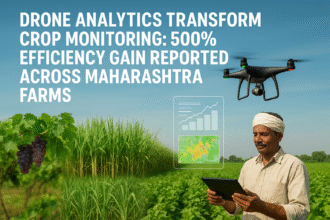
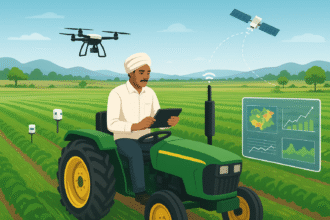
Integrated IoT and blockchain systems enable advanced precision agriculture practices. Variable-rate application systems use sensor data for optimal input usage. Automated irrigation responds to soil moisture levels. Drone monitoring integrates with ground sensors for comprehensive crop surveillance.
Resource optimization yields significant benefits. Fertilizer usage reduces by 20-30% through precision application. Water consumption decreases by 25-40% with smart irrigation. Pesticide applications become targeted based on pest monitoring. Energy consumption optimizes through smart equipment management.
Yield improvements result from optimized management. Crop yields increase by 15-25% through precision practices. Quality improvements enable premium pricing. Reduced input costs improve profit margins. Environmental impacts decrease through efficient resource usage.
Case Study: Haryana Smart Village Success
Kurukshetra district’s Ladwa village exemplifies successful smart village implementation. The 2,500-hectare village received comprehensive digital infrastructure in March 2024. Results demonstrate the transformative potential of integrated technologies.
Infrastructure deployment included 500 IoT sensors monitoring soil, weather, and crop conditions. Blockchain networks process over 10,000 transactions daily. 5G connectivity enables real-time data transmission. Solar microgrids provide 24/7 power supply.
Farmer benefits are measurable and significant. Wheat yields increased by 22% through precision management. Rice production improved by 18% with optimized water usage. Input costs decreased by ₹8,000 per hectare on average. Farmer incomes increased by 35% within one growing season.
Technology adoption rates exceed expectations. 95% of farmers use mobile applications daily. 80% participate in digital marketing platforms. 70% utilize digital financial services. 90% trust blockchain-verified certificates.
Maharashtra Model Village Network
Maharashtra’s implementation covers 5,000 villages across 15 districts. The state’s approach emphasizes farmer producer organization (FPO) integration with digital platforms. Cooperative structures facilitate technology adoption and resource sharing.
Sugarcane cultivation benefits significantly from digital integration. IoT sensors monitor soil moisture and nutrient levels. Blockchain systems track production from field to sugar mill. Smart contracts automate payment processing. Farmers receive payments within 48 hours of cane delivery.
Horticulture applications demonstrate precision agriculture benefits. Grape vineyards use sensor networks for optimal irrigation and fertilization. Mango orchards monitor flowering and fruiting stages. Vegetable crops benefit from automated greenhouse management.
Punjab Digital Agriculture Hub
Punjab’s digital transformation focuses on cereal crop optimization and mechanization integration. The state’s 3,000 smart villages utilize advanced machinery connected to IoT networks. Blockchain systems ensure authentic input supply and prevent counterfeiting.
Paddy cultivation undergoes significant optimization. Laser land leveling integrated with GPS systems improves water use efficiency. Direct seeded rice techniques utilize sensor-guided seed placement. Automated nutrient management reduces fertilizer waste.
Wheat production benefits from precision agriculture applications. Variable-rate seeding optimizes plant population. Real-time nitrogen management improves grain protein content. Automated harvesting systems integrate with moisture monitoring for optimal timing.
Technology Training and Capacity Building
Comprehensive training programs ensure successful technology adoption. Village-level training centers provide hands-on experience with digital tools. Master trainer programs create local expertise. Mobile training units reach remote locations.
Training curriculum covers multiple aspects of digital agriculture. Basic digital literacy enables smartphone and app usage. Technical training covers sensor maintenance and data interpretation. Financial literacy supports digital banking and insurance products.
Training effectiveness metrics show positive outcomes. 85% of trained farmers actively use digital platforms. 70% demonstrate proficiency in data interpretation. 90% successfully complete digital transactions. 80% report increased confidence in technology usage.
Data Analytics and Decision Support
Advanced analytics platforms process vast amounts of agricultural data to provide actionable insights. Machine learning algorithms identify patterns in crop performance. Predictive models forecast weather impacts and market trends. Recommendation systems suggest optimal farming practices.
Data sources include IoT sensors, satellite imagery, weather stations, and farmer inputs. Integration platforms combine multiple data streams for comprehensive analysis. Real-time processing enables immediate decision support. Historical analysis supports long-term planning.
Decision support applications cover multiple domains. Crop selection recommendations use soil and climate data. Planting schedules optimize based on weather forecasts. Harvest timing predictions maximize quality and yield. Market timing suggestions optimize price realization.
Challenges and Solutions
Implementation challenges require systematic solutions. Technology complexity overwhelms some farmers. Infrastructure limitations affect remote areas. Cost concerns impact adoption rates. Maintenance requirements exceed local capabilities.
Solutions emerge through collaborative approaches. Simplified user interfaces improve accessibility. Public-private partnerships fund infrastructure development. Cooperative models share technology costs. Local service networks provide maintenance support.
Cultural adoption challenges include resistance to change and trust concerns. Solutions involve demonstration plots, peer learning networks, and gradual implementation approaches.
Environmental Impact and Sustainability
Digital agriculture significantly improves environmental sustainability. Precision applications reduce chemical usage by 25-35%. Water conservation averages 30-40% through smart irrigation. Energy efficiency improves through automated systems. Carbon footprint reduces through optimized transportation and reduced input usage.
Soil health monitoring enables sustainable practices. Regular soil testing guides nutrient management. Organic matter monitoring supports soil conservation. pH management optimizes nutrient availability. Erosion monitoring guides conservation practices.
Biodiversity conservation benefits from precision pest management. Selective treatments preserve beneficial insects. Habitat monitoring guides conservation efforts. Pollinator protection improves through targeted applications.
Economic Impact Assessment
Economic benefits extend beyond individual farms to entire rural communities. Village-level income increases average 25-30% in participating smart villages. Employment generation includes technical support, data analysis, and equipment maintenance roles. Local businesses benefit from increased farmer purchasing power.
Government savings result from improved program efficiency. Subsidy delivery costs reduce by 40% through digital systems. Administrative expenses decrease through automation. Fraud prevention saves significant resources.
Export competitiveness improves through quality certification and traceability. Premium market access increases farmer revenues. International compliance becomes achievable through digital documentation.
Future Expansion Plans
Mission expansion plans include technology upgrades and geographic coverage extension. Phase 2 implementation begins in January 2025, covering additional 50,000 villages. Advanced technologies including 5G, edge computing, and artificial intelligence will be integrated.
International collaboration opportunities emerge from successful implementation. Technology export potential exists for developed solutions. Consulting services can support similar initiatives in other countries. Knowledge sharing agreements facilitate global learning.
Investment opportunities attract private sector participation. Equipment manufacturing benefits from expanding markets. Service companies find new revenue streams. Technology developers access large-scale deployment opportunities.
The Digital Agriculture Mission 2025 represents a transformative approach to rural development, combining blockchain transparency, IoT monitoring, and smart analytics to create truly intelligent agricultural systems. As implementation progresses, these smart villages will serve as models for sustainable, profitable, and technologically advanced farming communities across India and beyond.