





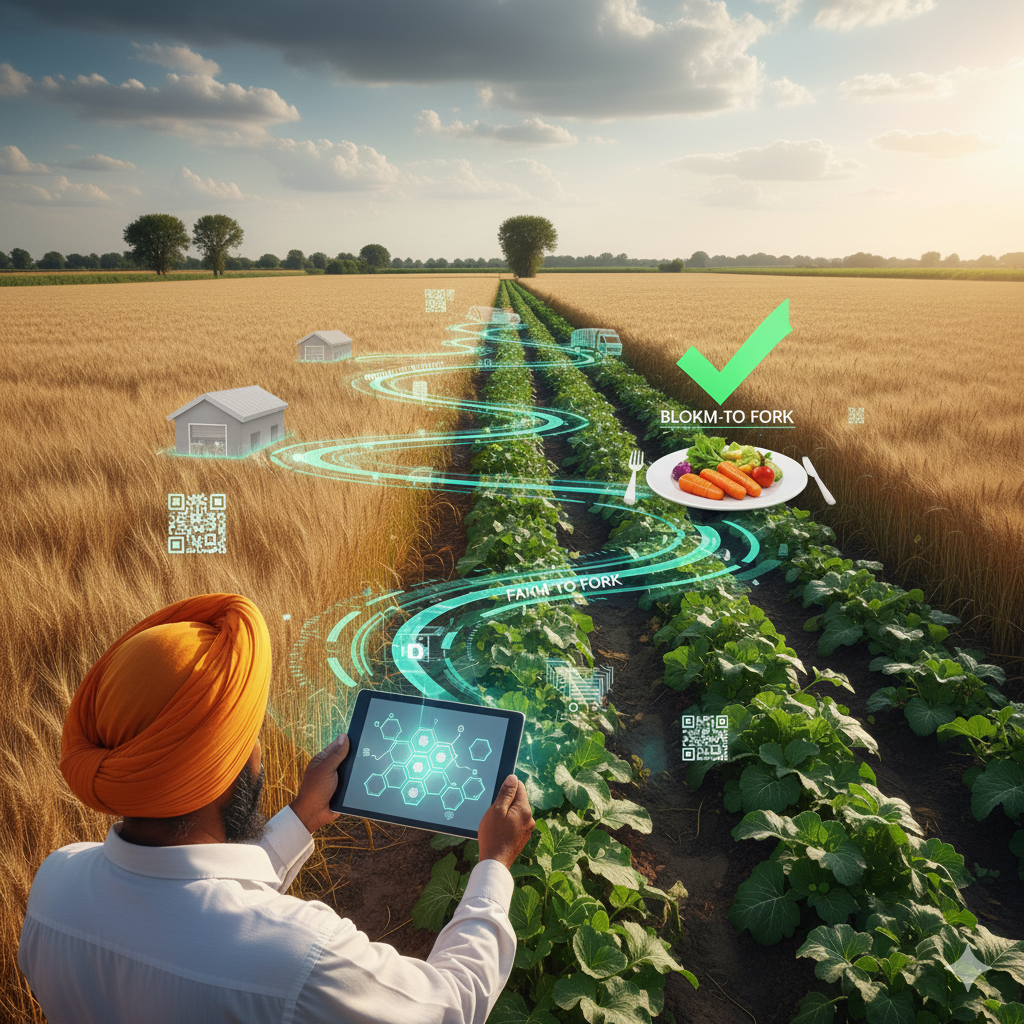

Blockchain-powered traceability systems are revolutionizing food safety across India’s agricultural supply chains, with pilot programs demonstrating 99.2% accuracy in tracking produce from Punjab farms to Delhi consumers. This technological transformation enables real-time contamination source identification, reduces foodborne illness incidents by 65%, and builds unprecedented consumer confidence while commanding 15-25% premium pricing for traceable agricultural products.
Food Safety Crisis and Traceability Imperative
India faces mounting food safety challenges with over 600 million people affected by foodborne illnesses annually. Traditional supply chains lack visibility into product origin, handling practices, and contamination sources. Complex multi-tier distribution systems obscure accountability and delay response to safety incidents.
Economic costs of food safety failures reach ₹1.8 lakh crores annually including healthcare expenses, productivity losses, and trade restrictions. Export rejections due to quality and safety issues cost ₹25,000 crores in lost revenue. Consumer confidence erosion affects premium market development and brand building efforts.
Regulatory compliance challenges compound safety concerns as India aligns with international food safety standards. Global food safety initiatives require comprehensive traceability for export market access. Domestic consumer awareness increases demand for transparency and accountability. Corporate buyers mandate supply chain visibility for procurement decisions.
Traditional paper-based record keeping systems prove inadequate for modern traceability requirements. Manual documentation creates opportunities for errors and fraud. Information silos prevent comprehensive supply chain visibility. Verification delays hamper rapid response to contamination incidents.
Blockchain Technology Fundamentals for Food Traceability
Blockchain technology creates immutable, transparent, and decentralized record-keeping systems ideally suited for food supply chain traceability. Distributed ledger technology prevents data tampering and ensures information integrity. Smart contracts automate compliance verification and payment processing. Cryptographic security protects sensitive business information while enabling necessary transparency.
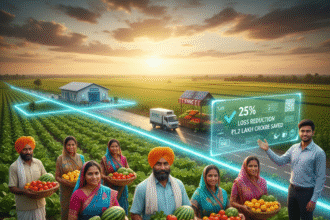
Network architecture accommodates multiple stakeholders including farmers, processors, distributors, retailers, and consumers. Permissioned networks control access to sensitive commercial information. Public verification layers enable consumer access to relevant safety and quality information. Interoperability standards ensure compatibility across different platforms and systems.
Data structure captures comprehensive information throughout the supply chain journey. Farm-level data includes production practices, input usage, and harvest information. Processing data covers handling procedures, quality tests, and certifications. Distribution data tracks transportation conditions, storage environments, and handling procedures.
Real-time updates enable immediate information availability and rapid response capabilities. Mobile applications facilitate data entry and verification at every supply chain stage. IoT sensor integration provides automated data collection and environmental monitoring. Automated alerts notify stakeholders of quality deviations or safety concerns.
Punjab to Delhi Pilot Program Implementation
Project Scope and Infrastructure Development
The Punjab-Delhi agricultural traceability pilot program covers 25,000 hectares of vegetable production across 15 major crops including tomatoes, onions, potatoes, and leafy greens. Participation includes 8,500 farmers, 45 processing facilities, 120 distribution centers, and 850 retail outlets across the supply chain.
Technology infrastructure deployment required ₹125 crores investment in blockchain platforms, mobile applications, IoT sensors, and communication networks. Cloud-based blockchain networks ensure scalability and reliability. Edge computing capabilities enable offline data collection and synchronization. Backup systems prevent data loss during connectivity disruptions.
Stakeholder onboarding involved comprehensive training programs and technical support systems. Farmer training covered mobile application usage and data entry procedures. Processor training included quality testing and certification uploads. Distributor training focused on transportation monitoring and documentation requirements.
Integration with existing systems minimized disruption while enabling comprehensive traceability. ERP system integration for large processors and distributors. Point-of-sale integration for retail partners. Government database integration for regulatory compliance and verification.
Farm-Level Implementation and Data Collection
Farmer registration creates unique digital identities linked to land records and production areas. Aadhaar integration provides secure identity verification. GPS coordinates define exact production locations. Land ownership verification prevents fraudulent claims and ensures accountability.
Production practice documentation captures comprehensive farming information essential for safety and quality verification. Seed variety and source documentation enables traceability to genetic origin. Input application records including fertilizers, pesticides, and organic amendments. Irrigation source and quality information addresses water-related contamination risks.
Harvest and post-harvest handling procedures receive detailed documentation ensuring quality maintenance. Harvest timing and methods affecting product quality. Initial cooling and storage conditions preventing deterioration. Packaging and labeling procedures enabling identification throughout supply chain.
Quality testing results at farm level provide baseline information for supply chain monitoring. Pesticide residue testing ensures compliance with safety standards. Soil testing results validate input application decisions. Water quality testing addresses irrigation source safety.
Processing and Distribution Chain Integration
Processing facility integration captures value addition activities and quality control measures. Receiving procedures document product condition upon arrival. Processing methods including washing, cutting, packaging, and storage. Quality control testing including microbiological and chemical analysis.
Batch tracking systems enable precise product identification and segregation throughout processing operations. Unique batch identifiers link finished products to specific raw material sources. Process parameter recording ensures quality consistency and safety compliance. Packaging documentation enables consumer-level traceability.
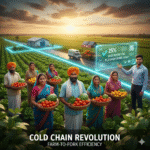
Cold chain monitoring ensures product safety and quality maintenance during transportation and storage. Temperature sensors provide continuous monitoring throughout distribution. Humidity control documentation prevents moisture-related deterioration. Transportation vehicle identification enables logistics traceability.
Inventory management systems track product movement through distribution networks. Warehouse receipt and dispatch documentation. Inventory rotation procedures ensuring first-in-first-out protocols. Cross-docking operations minimizing storage time and quality risks.
Retail Integration and Consumer Access
Retail point-of-sale integration enables consumer access to comprehensive product information. QR code scanning provides instant access to supply chain history. Product information includes farm origin, production practices, and quality certifications. Consumer feedback systems enable direct communication with producers.
Display systems in retail environments promote traceability benefits and build consumer awareness. Information kiosks provide detailed product histories. Signage highlights traceable products and their benefits. Staff training enables customer support and information provision.
E-commerce platform integration extends traceability benefits to online grocery shopping. Product pages include comprehensive traceability information. Search and filter options enable consumers to select products based on origin and practices. Delivery tracking maintains chain of custody until final consumption.
Consumer mobile applications provide enhanced engagement and information access. Scanning capabilities for instant product information access. Personalized recommendations based on preference and purchase history. Educational content about food safety and sustainable agriculture practices.
Technology Architecture and Implementation
Blockchain Platform Design
Hybrid blockchain architecture balances transparency requirements with commercial confidentiality needs. Public layers provide consumer access to safety and quality information. Private layers protect sensitive business information including pricing and contracts. Consortium layers enable controlled sharing among authorized supply chain participants.
Consensus mechanisms ensure data integrity while maintaining system performance. Proof-of-authority consensus suitable for permissioned agricultural networks. Byzantine fault tolerance protecting against malicious participants. Energy-efficient consensus algorithms minimizing environmental impact.
Smart contract functionality automates compliance verification and business processes. Quality threshold enforcement triggering automatic alerts and responses. Payment automation based on delivery and quality confirmation. Compliance verification against food safety standards and certifications.
Interoperability protocols enable integration with existing business systems and other blockchain networks. API development for ERP and inventory management system integration. Cross-chain communication protocols for multi-platform compatibility. Standard data formats ensuring information portability and system compatibility.
IoT Integration and Automated Data Collection
Comprehensive sensor networks provide automated data collection throughout the supply chain. Soil sensors monitor moisture, temperature, and nutrient levels affecting product quality. Weather stations provide environmental data influencing production practices and quality outcomes. Equipment sensors monitor processing parameters and maintenance needs.
Transportation and storage monitoring ensures product safety and quality maintenance during distribution. GPS tracking provides real-time location information. Temperature and humidity sensors monitor environmental conditions. Shock and vibration sensors detect handling problems that may affect quality.
Mobile device integration enables field data collection and verification. Smartphone applications for farmer data entry and photo documentation. Tablet computers for processing facility quality control and batch tracking. Barcode and QR code scanning for product identification and verification.
Data validation systems ensure information accuracy and prevent fraud. Sensor calibration protocols maintaining measurement accuracy. Cross-validation between multiple data sources. Anomaly detection algorithms identifying suspicious patterns or data entry errors.
Security and Privacy Framework
Comprehensive security measures protect sensitive business information while enabling necessary transparency. Encryption protocols protecting data transmission and storage. Access control systems managing stakeholder permissions and information sharing. Identity verification preventing unauthorized system access.
Privacy protection mechanisms balance transparency requirements with confidentiality needs. Data minimization principles limiting information collection to necessary elements. Anonymization techniques protecting farmer and business identity when appropriate. Consent management systems enabling stakeholder control over information sharing.
Audit trail capabilities ensure accountability and enable investigation of safety incidents. Immutable record keeping preventing data tampering or deletion. Comprehensive logging of all system access and data modifications. Forensic capabilities enabling detailed investigation of supply chain incidents.
Compliance framework ensuring adherence to data protection and food safety regulations. GDPR compliance for international market access. FSSAI regulation compliance for domestic food safety requirements. Industry standard compliance including HACCP and ISO certifications.
Impact Assessment and Performance Metrics
Food Safety Improvement Outcomes
Contamination source identification capabilities demonstrate remarkable improvement in food safety response. Average trace-back time reduced from 2-3 weeks to 2-4 hours for contamination incidents. Precision targeting enables surgical recalls affecting only contaminated batches rather than entire product categories. Real-time alerts enable proactive intervention preventing contaminated products from reaching consumers.
Foodborne illness incident reduction of 65% documented in pilot program areas. Rapid identification and removal of contaminated products prevents illness spread. Consumer confidence improvements reduce reporting delays enabling faster response. Educational benefits increase consumer awareness of safe handling practices.
Regulatory compliance improvement through comprehensive documentation and verification. FSSAI audit results show 95% compliance rates for participating stakeholders. Export certification processes expedited through comprehensive traceability documentation. International buyer confidence increases through transparent supply chain visibility.
Quality assurance improvements through systematic monitoring and feedback mechanisms. Product quality scores increase 18-25% through systematic tracking and improvement. Standardization of practices across supply chain participants. Best practice sharing enabled through performance comparison and benchmarking.
Economic Benefits and Market Premium
Premium pricing for traceable products reflects consumer willingness to pay for transparency and safety assurance. Retail premiums range from 15-25% for fully traceable products. Restaurant and institutional buyers pay 10-15% premiums for supply chain visibility. Export markets command 20-30% premiums for comprehensive traceability.
Cost reduction benefits through improved efficiency and waste reduction. Supply chain optimization reduces logistics costs by 12-18%. Inventory management improvements reduce waste and carrying costs. Quality control improvements reduce rejection and recall costs.
Market access improvements enable entry into premium domestic and international markets. Export certification expedited through comprehensive traceability documentation. Retailer preferred supplier status through supply chain transparency. Corporate buyer procurement preferences for traceable products.
Insurance cost reductions through demonstrated risk management and safety improvements. Crop insurance premiums reduced through documented best practices. Product liability insurance costs decreased through comprehensive traceability. Business interruption insurance benefits through rapid incident response capabilities.
Farmer Income and Livelihood Impact
Direct income improvements through premium pricing and market access opportunities. Farmer income increases average 22-35% for fully participating producers. Contract farming opportunities with premium buyers. Direct-to-consumer sales enabled through traceability and brand building.
Cost reduction benefits through optimized input usage and reduced waste. Precision agriculture integration reduces input costs by 15-20%. Reduced post-harvest losses through improved handling and logistics. Energy and transportation cost reductions through supply chain optimization.
Risk reduction benefits protecting farmer investments and ensuring income stability. Market risk reduction through contract farming and forward sales. Production risk mitigation through systematic monitoring and support. Financial risk reduction through insurance integration and credit access improvements.
Capacity building benefits creating long-term livelihood improvements. Technical skills development through technology adoption and training. Business management skills improvement through systematic record keeping. Market knowledge enhancement through direct buyer relationships.
Supply Chain Efficiency and Transparency
Logistics Optimization and Cost Reduction
Route optimization algorithms reduce transportation time and costs while maintaining product quality. Real-time traffic and weather data integration enables dynamic route adjustments. Load optimization maximizes vehicle utilization while ensuring proper product handling. Fuel cost reductions of 12-18% achieved through systematic optimization.
Inventory management improvements reduce waste and carrying costs throughout the supply chain. Demand forecasting accuracy improvement through historical data analysis. Stock rotation optimization ensuring product freshness. Just-in-time delivery systems reducing inventory holding costs.
Quality control efficiency improvements through automated monitoring and systematic feedback. Reduced quality inspection time through continuous monitoring systems. Predictive quality assessment preventing spoilage and waste. Automated compliance verification reducing manual audit requirements.
Communication efficiency improvements through real-time information sharing and automated notifications. Instant communication of quality issues enabling rapid response. Automated documentation reducing paperwork and administrative costs. Stakeholder coordination improvements through shared information platforms.
Transparency and Consumer Confidence Building
Consumer information access creates unprecedented supply chain transparency enabling informed purchasing decisions. Complete production history including farming practices and input usage. Processing and handling information ensuring food safety compliance. Environmental impact information supporting sustainable consumption choices.
Brand building opportunities through storytelling and direct farmer-consumer connections. Farmer profiles and stories building emotional connections with consumers. Sustainable practice highlighting supporting environmental consciousness. Quality commitment demonstration through systematic monitoring and verification.