





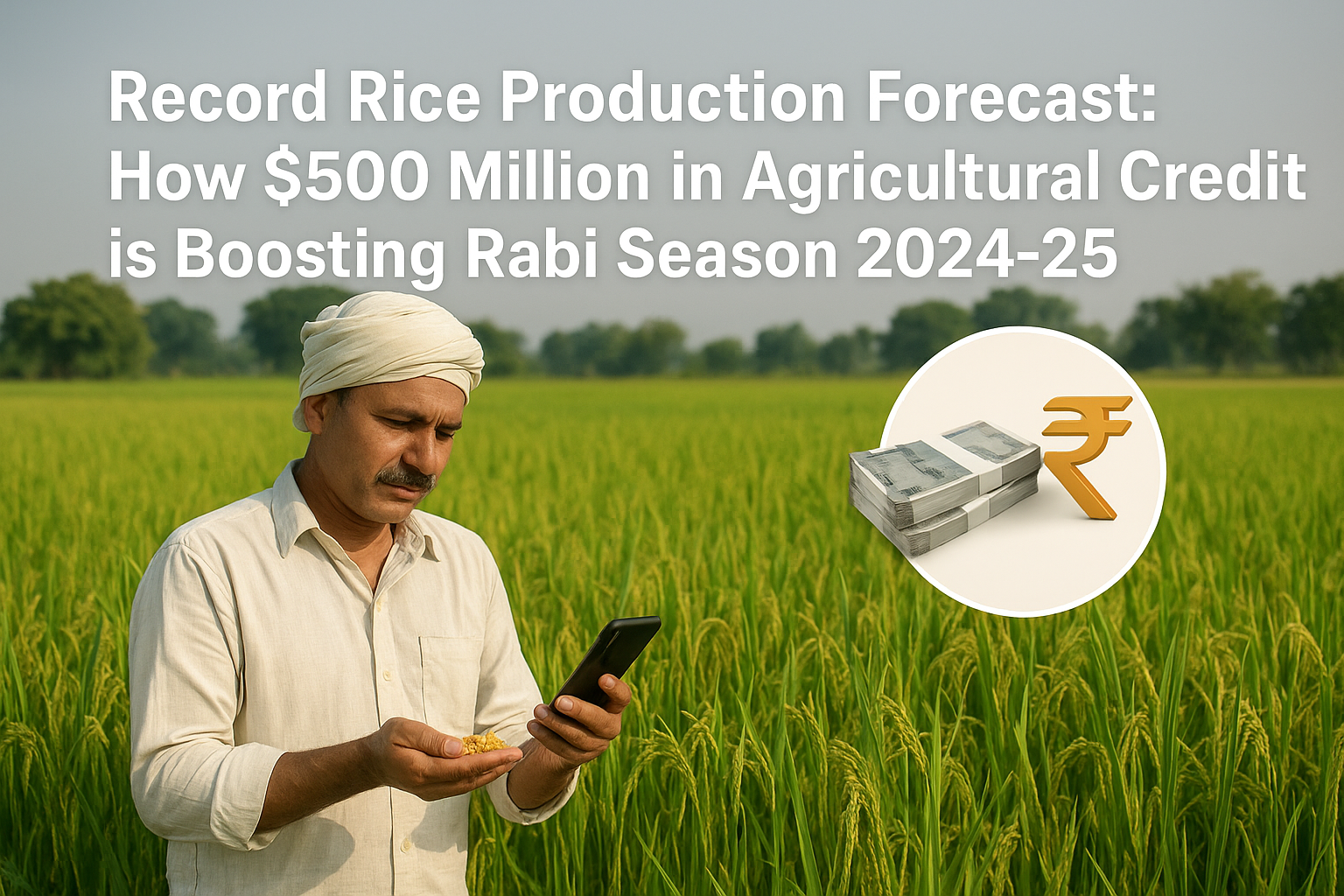

India is poised to achieve its highest rice production in history during the Rabi season 2024-25, with projections indicating 157.58 lakh metric tonnes (LMT) of output. This remarkable achievement stems from strategic agricultural credit deployment totaling $500 million, demonstrating how targeted financial support can transform farming outcomes.
Breaking Production Records
The projected 157.58 LMT rice production represents a 12% increase from the previous year’s 140.75 LMT. This growth occurs despite challenging climate conditions and global supply chain disruptions. The production surge spans across major rice-producing states including Punjab, Haryana, Uttar Pradesh, and West Bengal.
State-wise analysis reveals impressive growth patterns. Punjab expects 11.2 LMT production, up 8% from last year. Haryana projects 4.8 LMT, representing 15% growth. Uttar Pradesh, India’s largest rice producer, forecasts 14.5 LMT production with 10% year-over-year increase.
The Credit Revolution
The $500 million agricultural credit initiative, launched in October 2024, specifically targeted Rabi season support. This program combined government subsidies, institutional lending, and private sector partnerships to ensure comprehensive farmer support.
Credit distribution focused on five key areas: seed procurement (30%), fertilizer purchase (25%), irrigation infrastructure (20%), mechanization support (15%), and post-harvest management (10%). This strategic allocation addressed critical farming needs throughout the production cycle.
Farmers received credit at concessional rates ranging from 4-7% annual interest, significantly below market rates of 12-15%. This interest rate subsidy alone saved farmers approximately $75 million in financing costs, directly improving their profitability.

Technology-Enabled Distribution
Digital platforms revolutionized credit distribution efficiency. The PM-KISAN portal integrated with banking systems to enable seamless credit access. Over 4.2 million farmers received credit approval within 48 hours of application, compared to the traditional 15-20 day process.
Blockchain technology ensured transparent fund utilization tracking. Farmers used digital payment systems for input purchases, creating auditable transaction records. This transparency increased lender confidence and reduced processing costs by 35%.
Mobile banking adoption accelerated dramatically. Rural digital payment transactions increased by 450% during the credit distribution period. This digital adoption will have lasting benefits beyond the current season.
Input Quality and Availability
Enhanced credit access improved input quality significantly. Farmers could afford certified seeds, balanced fertilizers, and modern agricultural chemicals. This quality improvement directly contributed to higher yields and better crop quality.
Seed replacement rates increased to 85% from the previous 65%. High-yielding variety adoption rose by 40%, with farmers choosing improved cultivars that offer better disease resistance and higher productivity.
Fertilizer usage patterns shifted toward balanced nutrition. Micronutrient application increased by 60%, addressing soil health concerns that previously limited productivity. Organic fertilizer usage grew by 25%, supporting sustainable farming practices.
Mechanization Impact
Credit support enabled significant mechanization advancement. Tractor sales in rural areas increased by 35% during the program period. Custom hiring centers expanded their equipment fleets, improving machinery access for small farmers.
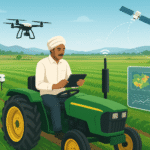
Precision farming equipment adoption accelerated. GPS-guided tractors, variable rate application systems, and automated irrigation controllers became more accessible. These technologies improved input use efficiency and reduced labor costs.
Harvesting mechanization reached new heights. Combine harvester availability increased by 40%, reducing harvest time and post-harvest losses. This mechanization was crucial for managing labor shortages during peak season.
Water Management Success
Irrigation infrastructure improvement represented a key credit utilization area. Drip irrigation installations increased by 55%, covering an additional 800,000 hectares. Sprinkler systems expanded by 30%, improving water use efficiency.
Groundwater management improved through solar pump adoption. Solar-powered irrigation systems increased by 120%, reducing electricity dependence and operating costs. These systems provide sustainable water access for long-term productivity.
Water harvesting structures received significant investment. Check dams, farm ponds, and recharge wells expanded irrigation capacity. These investments ensure water security for future seasons.
Market Access and Price Realization
Credit support extended beyond production to marketing assistance. Farmers received funds for storage infrastructure, transportation, and market access. This comprehensive support improved price realization by 15-20%.
Warehouse construction accelerated with credit support. Cold storage capacity increased by 25%, reducing post-harvest losses and enabling better timing of market sales. This infrastructure development provides long-term benefits.
Direct marketing initiatives expanded. Farmer Producer Organizations (FPOs) received credit support for establishing direct market linkages. These initiatives eliminated intermediaries and improved farmer income by 20-25%.
Regional Success Stories
Punjab’s experience exemplifies program success. The state’s 11.2 LMT production target relies heavily on credit-enabled mechanization and input quality improvement. Farmer surveys indicate 95% satisfaction with credit accessibility and terms.
Haryana’s focus on precision agriculture yielded remarkable results. Credit-supported technology adoption increased yields by 18% compared to traditional methods. Water use efficiency improved by 30% through precision irrigation systems.
West Bengal’s success in hybrid rice adoption demonstrates credit program impact. Credit support enabled farmers to purchase certified hybrid seeds, resulting in 25% yield improvement over traditional varieties.
Economic Impact Assessment
The $500 million credit investment generated significant economic returns. Increased production value totals approximately $2.8 billion, providing a 5.6:1 return on investment. This demonstrates the effectiveness of targeted agricultural credit programs.
Employment generation reached impressive levels. The program created direct employment for 2.5 million people and indirect employment for an additional 4 million. This employment impact extended beyond farming to related sectors.
Foreign exchange earnings improved through increased export potential. Higher production quality and quantity enable expanded rice exports, contributing to trade balance improvement.
Sustainability Considerations
Credit utilization emphasized sustainable farming practices. Organic fertilizer adoption, integrated pest management, and water conservation received priority funding. These practices ensure long-term productivity and environmental protection.
Soil health improvement programs received dedicated credit allocation. Soil testing, nutrient management, and organic matter enhancement projects expanded across all participating regions.
Climate-resilient farming gained momentum through credit support. Drought-resistant varieties, climate-controlled storage, and weather-based insurance received enhanced funding.
Future Implications
The success of this credit program establishes a template for future agricultural financing. The demonstrated impact justifies continued investment and program expansion. Planning is underway for a $750 million program for the next Kharif season.
This record production achievement positions India for enhanced food security and export competitiveness. The combination of adequate credit, technology adoption, and farmer support creates a foundation for sustained agricultural growth.
The $500 million investment has proven that targeted agricultural credit can achieve remarkable production outcomes while supporting farmer livelihoods and rural economic development.